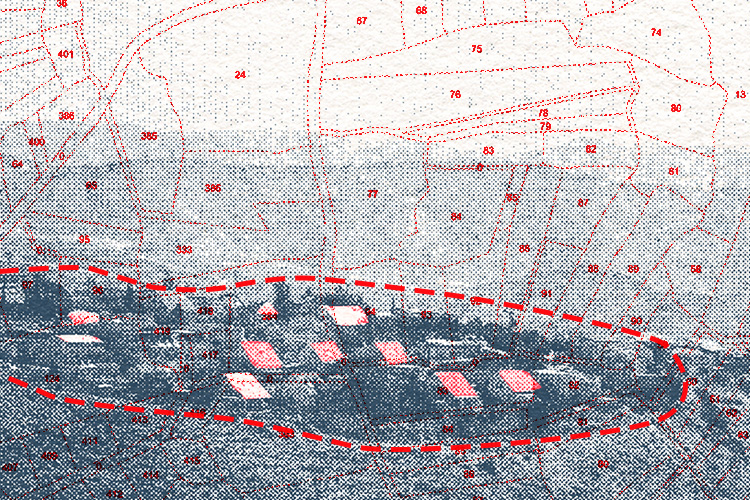
On February 15, 2026, the Israeli government approved measures to advance the resumption of settlement of land title proceedings in Area C of the West Bank. The decision is a follow-up to the Security Cabinet’s May 2025 decision to renew the process, which was suspended immediately after Israel occupied the West Bank. Resuming settlement of land title (SOLT) is one of the most significant measures Israel has taken in recent decades to further entrench its permanent control over the West Bank. Under ordinary circumstances, SOLT can be important for formalizing title and protecting property owners. However, under military occupation, certainly in conditions of profound inequality, when only Israeli interests are advanced, SOLT is turned into an instrument for entrenching the West Bank’s annexation, taking over Palestinian land and dispossessing Palestinians of their land and property rights. The government resolution came shortly after the High Court of Justice, in a decision delivered on January 27, 2026, rejected the petition filed by Yesh Din, the Association for Civil Rights in Israel and HaMoked against the Security Cabinet’s May 2025 decision, on the basis that it was “premature.”
Background
Settlement of land title is a comprehensive process of ascertaining and conclusively determining land ownership. As part of this process, the title history is examined, ownership and usage rights claims are resolved, and, finally, property boundaries are determined through surveying and division into blocks and parcels. SOLT does more than record private ownership; it also determines what land is ultimately registered as state land. At the end of the process, property ownership is entered into the land registry. The registration is conclusive and almost impossible to change as part of the SOLT procedure itself.
Settlement of land title proceedings in historic Palestine began during Ottoman rule and gained momentum under the British Mandate, when the authorities introduced mapping, surveying and registration methods designed to create a modern, conclusive and reliable land registry. After 1948, the Hashemite Kingdom of Jordan continued SOLT in the West Bank, based largely on the Mandate-era system. By June 1967, SOLT had been completed in approximately 34% of the West Bank, covering approximately 1,914 square kilometers, mostly in the northern West Bank and particularly the Jenin and Nablus districts, with some in the Ramallah area and the Jordan Valley. In Jerusalem and its vicinity, SOLT was partially completed; in the Bethlehem and Hebron districts, it remained largely incomplete, though in some locales it had reached advanced stages.
Suspending SOLT was one of the first steps taken by the military commander immediately after Israel’s occupation of the West Bank in 1967, as instructed by then-Military Advocate General Meir Shamgar, who later served as Attorney General and President of the Supreme Court. The suspension was formally entrenched in the Order Concerning the Suspension of Settlement of Land Title Proceedings, No. 291, 5728–1968. The suspension of SOLT was rooted in Israel’s obligations as an occupying power under international law, foremost among them the obligation to administer the occupied territory as a temporary trustee and act for the benefit of the protected Palestinian population. For this reason, SOLT proceedings were suspended rather than canceled, meaning any future resumption would continue from where they stopped and based on the information accumulated by the Jordanian authorities up to that time.
A Decision Amounting to Annexation and Dispossession
The government’s decision to resume SOLT aims to fundamentally change the way Israel controls land in the West Bank. Proponents of this decision have openly presented the move as part of an effort to strengthen settlements and tighten Israel’s grip on the West Bank, making clear that the renewal of SOLT is not a neutral measure to regulate property rights, but an overtly political step amounting to annexation.
The reasons for suspending SOLT after the West Bank’s capture in 1967 have not changed, and, if anything, have become even more compelling over the years. Settlement of land title is an inherently sovereign act. It is coercive, final and irreversible, which is why an occupying power is not permitted to complete it in a territory under its temporary control. Nevertheless, Israel is seeking to conclusively determine land rights, register land as state land and reshape land ownership according to its own interests, which neither represent nor correspond to the interests and rights of the protected Palestinian population. Having an Israeli public authority that is committed to Israeli interests pursue this process amounts to exercising sovereign authority in a territory where Israel is not sovereign. The government’s decision therefore constitutes a blatant violation of the laws of occupation and international law: both the obligation to act as a temporary trustee of the occupied territory and the obligation to refrain from any irreversible, long-term acts.
To implement the decision, the government has instructed the Military Commander to repeal the 1968 suspension order and amend Jordanian legislation to permit the resumption of SOLT, effectively turning the military commander into an instrument for implementing its policy in the West Bank. In other words, rather than administering the occupied territory within the limits imposed by the laws of occupation, the military commander is required to advance a measure intended to entrench permanent Israeli control over a territory subject to temporary control. This marks a shift from a policy of temporary administration of an occupied territory to the establishment of a permanent bureaucratic mechanism, civilian and Israeli in nature, which in practice applies state institutions to Area C, treats it as sovereign territory and further curtails Palestinians’ ability to defend their land rights.
Moreover, resuming SOLT will necessarily impinge on Palestinians’ property rights and lead to dispossession. A key reason for suspending SOLT after 1967 was the absence of hundreds of thousands of Palestinians, as many fled, had been expelled or were away at the time of the occupation and could not return after Israel seized the West Bank. These individuals are not physically in the area and cannot take part in the process, produce documents, defend their property or seek registration of their land. Over the years, and because of Israeli policies that barred them from returning, many have also been unable to cultivate their land. Under Israel’s restrictive interpretation of land law, the absence of continuous cultivation weakens the ability to prove title claims in the SOLT process.
SOLT renewal will not take place in a vacuum, but within a system that has demonstrated it serves only Israeli interests and works to expand illegal Israeli control and push Palestinians off their land. For decades, Israel has used state land declarations to take over land and allocate it exclusively for Israeli pursuits, first and foremost settlements, which are, per se, prohibited by international law. The measure therefore forms part of Israel’s settlement expansion policy and deepens discrimination and apartheid in the West Bank.
Israel is not a neutral actor capable of adjudicating ownership claims fairly in SOLT proceedings. As an occupying power, it has, for decades, pursued a consistent policy of expanding and consolidating Israeli control over land in the West Bank, systematically favoring the interests of the state and settlers over Palestinians’ rights. Israel, therefore, cannot be considered a neutral party in the process of determining ownership rights. Where a proceeding may result in the registration of land as private Palestinian property, private Jewish property or public land administered by the state, past experience shows that Israeli and settler interests will tilt the scales from the outset.
Furthermore, under a regime of occupation and apartheid, it is doubtful that the process could ever be free, equitable and inclusive. Palestinians would be structurally disadvantaged, having to prove title to an Israeli system that controls the information, mapping, rules and decision-making. Many Palestinians lack access to the documents required to establish ownership, including inheritance documents, title deeds and evidence of continuous cultivation. The process would be based on incomplete databases with missing information on past land registration, partly because some records are kept in Turkey and Jordan. In these circumstances, requiring Palestinians to provide full proper proof of ownership is not merely obstructive; the process is structured in a manner that increases the risk of erasing their rights.
Given all this, a process that ostensibly appears to clarify rights is expected in practice to become a vehicle for the wholesale erasure of rights. Palestinians unable to meet the high evidentiary threshold, those unable to participate in the process or those whose family ownership is partly connected to relatives expelled from the West Bank will lose their land rights, in whole or in part. In this reality, resuming SOLT is not a tool for regulating rights, but for deepening Israeli control in Area C, expanding the settlement enterprise and pushing Palestinians off their land.
The East Jerusalem precedent demonstrates how SOLT, presented as a bureaucratic process of registering land title, becomes a major instrument for violating Palestinians’ rights and taking over their land. Since East Jerusalem was formally annexed by Israel, in violation of international law and, therefore, without international recognition, its legal status differs from the rest of the West Bank. However, the implementation of SOLT in the city provides a clear indication of what can be expected in the West Bank.
Israel renewed SOLT in East Jerusalem in 2018. By 2026, the process was completed on 2,286 dunams (49 blocks) of land in East Jerusalem, and registration proceedings were carried out for 6,268 dunams (187 blocks). Monitoring by Israeli NGOs Bimkom and Ir Amim shows that, in the overwhelming majority of land where SOLT has been completed, the process serves the interests of the state and/or the settlement enterprise in the city. Approximately 85% of the land settled to date was transferred to state ownership and public bodies, while only approximately 1% was registered in the names of private Palestinian owners. In addition, SOLT is advanced primarily in areas where new settlements are planned.
Implementation
As part of its decision, the government set out the mechanism, budget and timetable for resuming SOLT in Area C. Some of the measures included in the decision are: setting up a dedicated land registration and settlement mechanism in the Ministry of Justice; authorizing the Land Registry and Settlement of Rights Authority to conduct full settlement of land title proceedings in Area C; and establishing an interministerial body, involving the Survey of Israel, the Civil Administration, the Legal Advisor to the Defense Establishment and the military. The decision’s explanatory notes state that, since the Security Cabinet’s May 2025 decision, the Land Registry and Settlement of Rights Authority in the Ministry of Justice has carried out extensive staff work under its leadership. This work included the establishment of subcommittees on legal matters, logistics, information systems, mapping and surveying, which provided recommendations and drafted requirements in their respective fields. Their outputs were consolidated into a document that outlines what is needed, including resources and relevant legal considerations, to resume SOLT proceedings.
The government allocated an unprecedented budget of approximately ILS 244 million (~ USD 80 million) for 2026–2030 and set a target to finalize the registration of at least 15% of unsettled land in Area C by the end of 2030. The entire process is expected to take approximately 30 years. Envisioning a 30-year implementation timeline in a regime of occupation, which is meant to be temporary, shows the chasm between the appearance of legality, i.e., avoiding applying full and permanent sovereignty over the West Bank, at least on paper, and Israel’s actual policy, as part of which it conducts itself, plans and budgets as though the territory were an integral part of the country.
The government’s plan to push ahead with SOLT renewal is already evident on the ground. In May 2026, the Ministry of Justice issued a tender for managing SOLT proceedings in the West Bank and East Jerusalem. In other words, Israel began looking for a body to run SOLT even before the necessary legal processes had been completed. A petition filed by Yesh Din against the tender argues it was issued without authority. Given that the Military Commander has not repealed the 1968 suspension order or authorized the Ministry of Justice to operate in the West Bank, the ministry has no authority to advance the process there. Furthermore, the tender seeks to transfer the management of a sensitive governmental process, in which the property rights of Palestinians living in the occupied territory are determined, to a private actor. In other words, not only is the state advancing the renewal of the process; it is also seeking to privatize a central part of its management.
Resuming SOLT in the West Bank is not an administrative measure designed to rectify a dated registry. It amounts to the establishment of a sovereign Israeli mechanism for determining land ownership in occupied territory. It overturns a policy adopted immediately after 1967 in keeping with the law of occupation, disregards the reasons for suspending the process, and deploys state institutions to reshape the land regime in the West Bank. In a reality in which Israel is not a neutral actor but an occupying power advancing the settlement enterprise, this amounts to de facto annexation, the erasure of Palestinian rights, and deepening dispossession and apartheid in Area C.

 Disable/Enable big cursor white
 Disable/Enable big cursor black